
Redeeming Time
Rhythm as Antidote to Liquid Modernity

Introduction
The heart of a Patrimonial vision is that true family wealth and legacy depends upon intentional cultural continuity and strong intergenerational attachment. True wealth is built not through passive accumulation or consumption but through productive stewardship shaped by lasting family identity and relationships. Such an identity cannot emerge passively. It arises through intentional rhythms that form the bonds and character essential for enduring family enterprises.
But intentional family rhythms are difficult to establish and even more challenging to maintain. Time is a scarce resource. Every family, no matter how committed or thoughtful, faces relentless external demands. Without vigilance, families inadvertently spend their limited time in ways that erode attachment, coherence, and identity. The stakes could hardly be higher: families either deliberately cultivate a legacy through the rhythms of their lives, or drift toward fragmentation, losing identity and continuity along the way.
Consider the Smith family. Mark and Jennifer Smith represent an ideal of the conservative, Christian, American professional class. They enjoy a happy marriage, their four children are well-adjusted, and their faith is sincere. They send their children, ages six through sixteen, to a classical Christian school. They deliberately chose this path to instill intellectual discipline, traditional virtue, and deep roots.
From the outside, the Smiths appear exemplary. Their schedules overflow with admirable activities: Latin club, debate, drama rehearsals, sports, youth groups, and classical-themed social events. But beneath this seemingly intentional structure, their family rhythms subtly undermine the deeper goals they hold dear.
Weekdays begin in a rush, as Jennifer shuttles the children to school, music lessons, and club activities. Dinner rarely involves the entire family together, each member eating hurriedly between commitments. Conversations often revolve around logistics and scheduling rather than meaningful topics. Saturdays, instead of providing space for productive family collaboration or projects, fill up with sports, tutoring, and more social engagements. By week’s end, Mark and Jennifer may wonder why their family feels fragmented and distant.
The Smiths have fallen prey to a common danger: their family time has been shaped more by external demands than deliberate priorities. Unchecked, these fragmented rhythms inevitably erode attachment, dilute family culture, and weaken the potential for genuine legacy.
Families must intentionally reclaim and structure their time. Productive stewardship, meaningful traditions, and deep attachment do not occur spontaneously. They arise through deliberate and disciplined rhythms (seasonal, weekly, and daily) that anchor family identity and practically shape character and capability for lasting legacy.
The purpose of this post is to illuminate precisely how intentional rhythms transform abstract intentions into tangible identity, productive stewardship, and intergenerational continuity. The Patrimonium vision is not merely aspirational; it is lived concretely through family schedules. If we are serious about building genuine, enduring legacy, we must start here—by redeeming time.
In earlier posts, we argued that family culture shapes identity, character, and civic virtue through deliberate rhythms and structured roles. We emphasized that consistent routines and intentional rituals form a child’s sense of belonging and purpose. Without intentionally reclaiming family-centered rhythms, no genuine patrimonial outcome is possible. Redeeming time (what I’ll call the Household Clock) is more than an optimization of family time. It is the necessary structure for turning abstract intentions into lasting identity, productive stewardship, and true generational continuity.
Liquid Modernity and the Crisis of Family Time
The fragmentation of family life today reflects what sociologist Zygmunt Bauman calls “liquid modernity,” a cultural state in which stable structures dissolve into fluid uncertainty. Unlike previous generations, families now experience constant disruption, shifting demands, and transient relationships. This liquidity pulls families apart, with parents often reduced to logistical coordinators managing scattered commitments rather than actively shaping family life.
This modern fragmentation emerges clearly in overlooked but powerful ways. Consider the “Mom Commute,” where parents, especially mothers, spend hours driving children between disconnected obligations, often dictated by external expectations rather than intentional family priorities. This logistical chaos quietly erodes relationships, reduces meaningful interaction, and subtly shifts children's identity formation away from stable family attachment toward peers and external institutions.
To counteract this pervasive fragmentation, families need a practical antidote: an intentional, structured approach to managing their time. This approach involves two key tools: The Hierarchy of Priorities and the Household Clock. The Hierarchy is a filter, through which the decisions of how to spend the precious currency of time can be made. The Household Clock, after this filtering process, offers clear rhythms (seasonal, weekly, daily) deliberately organized around explicit family priorities. The Hierarchy of Priorities anchors decisions and activities in the principles we’ve established as foundational to family legacy. The Household Clock concretely restores coherence and rhythms in service to these priorities.
Establishing a Hierarchy of Family Priorities
The Hierarchy of Priorities involves three core principles:
Family Identity and Attachment
Every family activity must first strengthen emotional bonds, secure attachment, and intergenerational connection. Shared experiences, consistent rituals, intentional mentorship, and meaningful conversations form the heart of family coherence and legacy. If an activity or commitment undermines these bonds—whether by fragmenting family time or diluting parental influence—it should be reconsidered or replaced.Productive Stewardship
Families must prioritize productive activities that build practical skills, develop responsibility, and enhance each family member’s active contribution to the household or family enterprise. Productive stewardship reinforces the deeper purpose and capability needed for genuine family continuity. By contrast, passive entertainment or consumptive activities that isolate or diminish practical contribution should be minimized.Intellectual and Cultural Formation
Intentional pursuit of intellectual depth, moral clarity, spiritual growth, and genuine leisure is essential to robust family culture. However, these pursuits must remain deliberately tied to and supportive of family identity and productive stewardship, rather than competing against or overshadowing them.
To illustrate briefly how the Hierarchy operates as a filter, consider the following scenarios:
A local sports league offers competitive soccer for your child but requires frequent weekend travel. Viewed through the Hierarchy, this opportunity would be critically weighed: Does extensive travel strengthen family identity and productive stewardship? Likely not, as it fragments weekend rhythms and dilutes family mentorship. Thus, the activity might be reconsidered or replaced with local activities aligning more closely with family coherence.
The family is considering relocating to a new home. Applying the Hierarchy, choices would prioritize locations enabling regular family meals, productive family projects, and shared worship within a close community. Geographic options demanding long commutes or excessive logistical complexity would rank low, despite superficial appeal.
These examples illustrate briefly how the Hierarchy practically anchors decisions in the foundational principles of family legacy. Detailed implementation of the resulting decisions—through seasonal, weekly, and daily rhythms—will follow in the subsequent sections.
Ultimately, the Hierarchy of Priorities provides the essential practical structure families need to deliberately resist modern fragmentation, intentionally shaping their rhythms around clear values. Only with this filter firmly in place can the Household Clock function effectively, anchoring lasting identity, productive stewardship, and genuine patrimonial continuity.
Seasonal Rhythms: Choosing Productivity Over Consumption
With the Hierarchy filer applied, we move to the structuring of time via Household Clock. At the broadest level, this intentional structuring begins with seasonal rhythms, anchoring the family’s identity, reinforcing attachment, and cultivating productive stewardship.
Historically, families naturally structured their lives around seasonal cycles dictated by agricultural calendars, religious observances, and community events. These seasonal rhythms provided coherence, identity, and deep connection across generations. Modern life erodes these rhythms. Seasons today often become fragmented, defined more by external pressures or commercial events than by intentional family choices. To counteract this fragmentation, families must deliberately reclaim and structure their seasonal patterns, explicitly using the Household Clock to reinforce productive stewardship and cultural continuity.
The Seasonal Household Clock
Practically, implementing the seasonal Household Clock involves three clear steps:
1. Identify Core Seasonal Traditions
Families begin by explicitly identifying or creating a few significant seasonal traditions that embody their core priorities of family identity, productive stewardship, and meaningful cultural engagement. These traditions must actively involve family members in shared experiences and concrete contributions. Certain Christian traditions are at a unique advantage here (namely, Catholics and Eastern Orthodox and some Protestant traditions like Lutheranism and Anglicanism) in that these seasons are built into the liturgical year. But the turn of the seasons themselves are rich with possibility for the rediscovery and claiming of traditions that mark the change of time, and correspond with culinary markers, and activities only possible in certain times, like summer all-family retreats.
2. Schedule and Protect Seasonal Traditions
Intentional scheduling is critical. Families must explicitly place these traditions on the annual calendar far in advance, firmly resisting external pressures or demands that might disrupt these intentional rhythms. Protecting this time requires clear boundaries and often saying “no” to activities that would fragment or dilute the tradition. To continue the liturgical example, Advent, the season in December leading up to Christmas is a time of preparation, rather than unbound celebration. To protect the significance of this season, being intentional about not making it about shopping and consumptive entertainment takes real intentionality and planning in advance.
3. Create and Iterate
Once the scheduling and intentional seasonal time is set aside, the work of creation begins with your family’s heritage, values and deeply held commitments in mind. If you have family traditions, recipes and cultural capital to tap into already, great. If this is limited (as it likely is), simply begin by starting with a few key traditions and build from there. This is a lifelong process, and will coalesce over time.
4. Evaluate and Adjust Regularly
Each year, families should explicitly evaluate how effectively these seasonal rhythms reinforce their hierarchy of priorities. Open reflection and discussion ensure these traditions remain vibrant, relevant, and productive. Adjustments might include refining traditions, adding new productive elements, or thoughtfully retiring practices that no longer serve the family’s core priorities. The summer family retreat is a perfect time to do this. What went right this last season? What can we do better, to deepen the commitment and reality of productive and cultural development?
Example: The Feast of St. Lucia as Intentional Tradition
A vivid example from our own household is our annual Feast of St. Lucia, celebrated each December during Advent. Every year, we host friends and family for a celebration of the early Christian martyr, who in the depth of the darkness of winter, symbolizes the coming hope of the incarnation at Christmas. Our children, and those of other families participate actively by playing musical instruments, singing carols, and baking traditional Lucia buns—saffron pastries symbolizing hope during the darkest time of year. The girls lead a procession with wreath and candle crowns, singing a traditional St. Lucia hymn of her life. This tradition deliberately reinforces productive cultural stewardship and intergenerational attachment.
Preparing for St. Lucia intentionally structures our Advent season. Children learn recipes and traditional baking techniques. Practicing music and learning Advent hymns reinforces discipline and creativity, enhancing family attachment. The act of hosting cultivates hospitality and productive engagement with our broader community.
The typical consumptive holiday seasons defined by passive entertainment and commercial activities, which subtly dilute family identity. The St. Lucia celebration directly resists this trend, reinforcing productive stewardship, cultural depth, and meaningful family attachment. Advent becomes a time of production rather than consumption; service and community rather than entertainment. Family friendships deepen, oriented hierarchically outside of themselves to a greater spiritual and cultural example and experience centered on the life of St. Lucia
Additional Seasonal Traditions
Building on this example, families should seek to implement productive traditions throughout the year, such as:
Annual Family Retreats: Clearly defined periods for true leisure, reflection, goal-setting, and review of productive stewardship. Practically, this involves gathering all family members, away from regular home distractions and ideally in beautiful, relaxing settings, to discuss the past year’s successes, challenges, and areas needing improvement. Ideally this would be in the same place every year, to build ongoing memories and identity around it. Families set explicit goals for the coming year, assign clear responsibilities, and review their progress on stewardship projects, financial management, or personal development. Outcomes include better alignment among family members, clearly defined expectations, and stronger accountability toward family legacy goals. We’ll cover these retreats as a function of family enterprise as well, in the future.
Summer Projects: Family projects such as home improvements, skill-building workshops, or family volunteer commitments, explicitly structured to reinforce practical contributions and productive collaboration. Examples include home improvement tasks like building a garden shed or repainting parts of the family home, skill-building workshops such as woodworking or cooking classes organized at home, or collaborative volunteer projects. Practically, these projects develop useful skills, strengthen teamwork, and clearly demonstrate each family member’s capability and contributions. Over time, these productive summers shape children’s confidence and prepare them concretely for active participation in the family enterprise.
Intentional Observance of Religious and Cultural Festivals: Celebrations deliberately emphasizing productive contributions, meaningful cultural engagement, and intergenerational continuity rather than passive consumption or isolated entertainment. We’ve already covered St. Lucia’s Day, but examples abound. Another tradition of ours is the Annunciation Mother Daughter Tea, aligning perfectly with Spring as a season of rebirth and life. Families might also observe Michaelmas in late September, celebrating with traditional meals like roast goose and fresh harvest apples. Martinmas in early November offers an opportunity to teach generosity through preparing and sharing seasonal dishes, often featuring roast meats and root vegetables. In the American context, families can reclaim Thanksgiving explicitly as a season for gratitude, storytelling, and intentional hospitality, involving children actively in meal preparation, family heritage conversations, and practical demonstrations of stewardship.
Guidelines for Practical Implementation
Practically, the Seasonal Household Clock is best implemented through:
Annual planning sessions scheduled to review and set family rhythms.
Clear communication of expectations about family members' roles.
Ongoing improvement sought through workshopping skills related to these traditions.
Firm boundaries protecting traditions from external pressures.
Families new to structured rhythms benefit from practical guidance. Planning sessions should involve honest reflections: “Did this tradition build family identity? If not, why?” Engage every family member, invite suggestions, then guide discussion back to family priorities.
Clear, direct communication is vital. Regularly remind family members about roles, timing, and expectations. Display roles prominently, such as on a calendar or whiteboard. Frequent, brief check-ins ensure commitment.
Boundary-setting approaches include communicating your traditions early and proactively to external groups, politely declining commitments that conflict with family rhythms. Consistency is key; once outsiders see your boundaries upheld repeatedly, they naturally respect and support your intentional structure. Over time, your family’s deliberate choices will become expected and supported rather than constantly challenged.
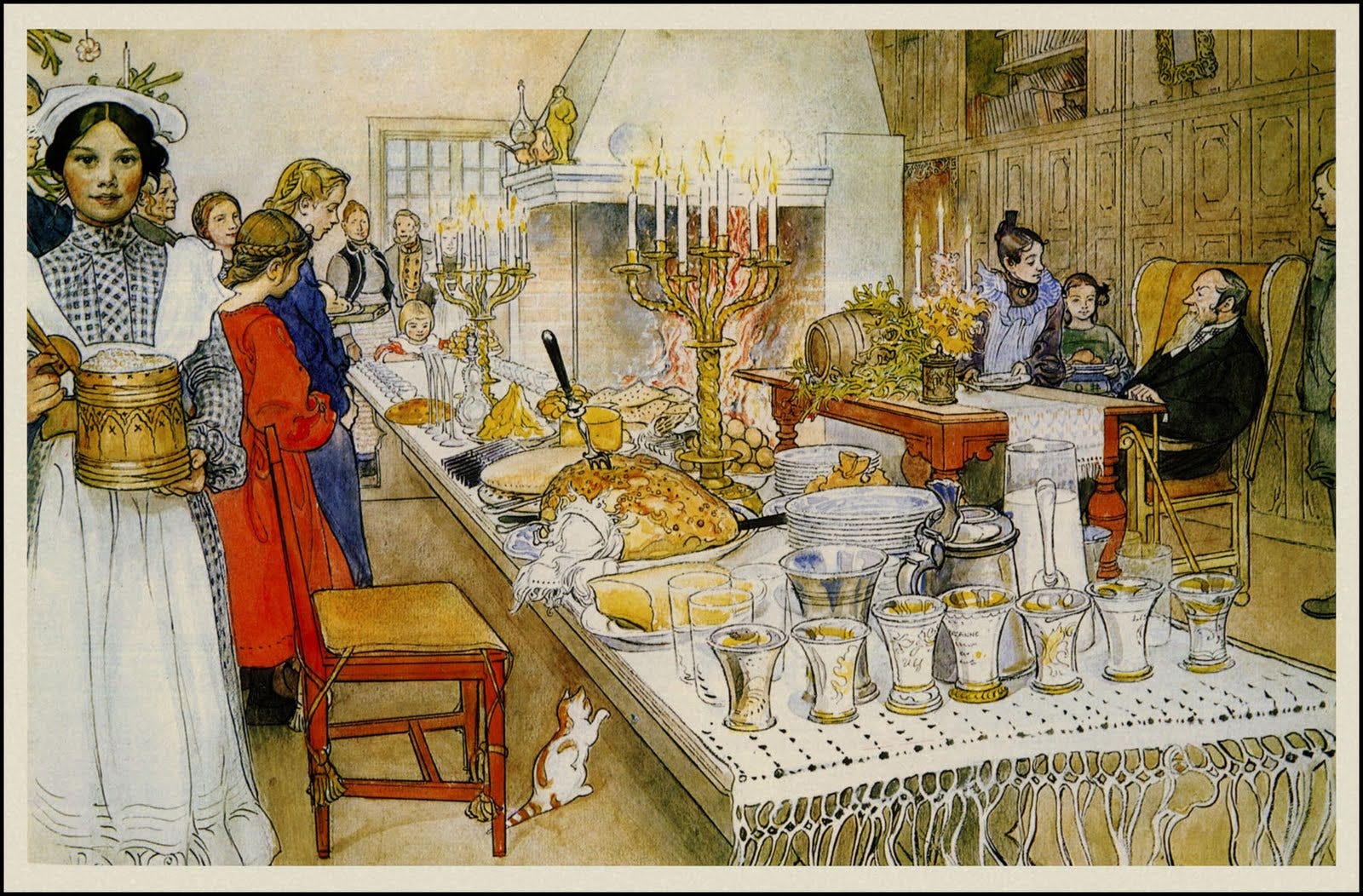
Carl Larsson, Christmas Eve (1904-1905) warmly captures the festive culmination of intentional seasonal rhythms and intergenerational tradition. A household prepares a richly set table, highlighting the structured celebration and cultural stewardship at the heart of family life, and showing how purposeful seasonal traditions cultivate deep attachment, cultural continuity, and enduring identity across generations.
Weekly Rhythms: Intentional Patterns of Attachment, Stewardship, and Cultural Continuity
Weekly rhythms bridge broader seasonal traditions with daily family routines. Families committed to the Patrimonium vision should structure their weeks intentionally, reinforcing attachment, clarifying roles, and cultivating productive stewardship. These regular patterns solidify identity and facilitate cultural and productive capacity transmission.
Four weekly rhythms significantly strengthen family attachment, productivity, and cultural continuity:
1. Intentional One-on-One Mentorship
Children need regular individual attention to form strong attachments and clear personal identity. A powerful practical rhythm is a weekly rotation of dedicated breakfasts, where each child receives one-on-one time with a parent. In our household, each child has a set “breakfast day” on the family calendar.
During these breakfasts, conversation intentionally moves beyond superficial topics. Parents engage children about school, friendships, future goals, and character growth. Older children may discuss career interests or relationship challenges, receiving mentorship rooted in family principles. Younger children simply benefit from focused attention, building attachment and trust over a shared meal to look forward to.
This regular, personal time creates natural openings for meaningful conversations, mentorship, and encouragement. It reinforces the child’s sense of belonging, purpose, and responsibility within the family enterprise. Over months and years, these breakfasts profoundly shape emotional development and prepare children concretely for productive family roles.
2. Weekly Date Nights: Anchoring Family Identity in a Strong Marriage
A thriving family enterprise begins with a stable, vibrant marriage. Intentional weekly date nights reinforce marital bonds, ensuring parents remain aligned in values, vision, and parenting strategies. Date nights are so important as to be completely non-negotiable. Other commitments must not infringe on this time.
Practically, weekly date nights should be on the schedule, ideally on the same evening each week. Importantly, getting out of the house is indispensable. The activities need not be elaborate but should always involve a shared meal to facilitate relaxed, meaningful conversation away from daily distractions.
On these dates, parents intentionally discuss family goals, parenting approaches, and reconnect emotionally. They review upcoming decisions or challenges, reinforcing shared priorities. This marital alignment deeply stabilizes family structure. Children observe parents prioritizing their marriage, gaining security from witnessing an affectionate relationship. Regular date nights thus provide an essential relational foundation for the entire patrimonial vision.
3. Saturday as Project and Alignment Day: Building Productive Capacity and Unity
Families dedicated to productive stewardship must deliberately structure Saturdays for joint family projects and strategic alignment. Saturdays should become days focused on productive activities, skill-building, and coordinated teamwork.
In our family, we begin Saturday with a big, all-family breakfast. This shared meal establishes a unified start to the day, allowing us to discuss project plans and ensure alignment around family goals.
Examples of practical family projects include landscaping, gardening, home repairs, carpentry projects, and most importantly for the longer term vision here, the family enterprise and time set aside to work “on the business” rather than in it. By actively engaging family members in productive tasks, parents mentor children in practical skills, teamwork, and responsibility. Over time, these Saturdays systematically build children’s capability and confidence, preparing them directly for meaningful roles in family enterprise.
Saturdays also provide opportunities to explicitly reinforce the family’s Hierarchy of Priorities. Brief morning or afternoon meetings can re-center the family around core values, evaluate progress, and clarify expectations. Families openly discuss how their work ties concretely to their patrimonial vision. Combining productivity with reflective conversation, Saturdays become powerful vehicles for cultural transmission, productive capacity, and family unity.
4. Sundays Reserved for Family Leisure and Cultural Formation
Genuine leisure requires intentionality. Families must deliberately reserve Sundays for restful, meaningful leisure structured explicitly to deepen family bonds, intellectual growth, and cultural continuity.
Practically, this means protecting Sundays from external obligations and passive entertainment. Instead, Sundays become predictable times for churchgoing and worship, music, poetry readings, literary discussions, board games, nature walks, culinary exploration, or cemetery visits to honor ancestors. Each activity reinforces family identity, creates shared memories, and tangibly transmits cultural and intellectual heritage to the next generation.
A family might regularly spend Sunday afternoons preparing meals together, while discussing meaningful cultural or spiritual topics. Others might read classic literature aloud, recite poetry, or engage in regular nature exploration. These intentional Sunday activities foster deep relational connections, rich intellectual engagement, and practical demonstrations of productive leisure rather than passive consumption.
Regularly reserving Sunday for family leisure creates a rhythm of rest, reflection, and cultural engagement. It reinforces the Hierarchy of Priorities by prioritizing family attachment and cultural formation, protecting coherence against modern fragmentation.
Practical Guidance for Implementing Weekly Rhythms
Successful implementation of weekly rhythms begins with clear communication and planning. Parents should introduce the purpose of each rhythm, clearly stating why each matter for family identity, attachment, and productive stewardship. Logistics should be planned out in advance.
Regular family meetings or brief weekly check-ins facilitate smooth implementation. Families might maintain a visible weekly calendar clearly outlining structured rhythms. When scheduling conflicts arise, parents consistently reinforce family priorities, politely declining outside commitments that threaten these structured rhythms.
Consistency is key here. Families maintaining these rhythms deliberately over months and years witness profound transformations in coherence, identity, and productive capacity. These intentional practices become ingrained in family culture, guiding children naturally toward productive roles and meaningful attachment to the family enterprise.
Daily Rhythms: Establishing Everyday Habits of Attachment, Stewardship, and Cultural Formation
Daily rhythms form the bedrock of family life. While seasonal and weekly rhythms set broader frameworks, the daily Household Clock practically anchors family identity, attachment, and productive stewardship through consistent, repeated habits.
In our home, we've established several practical daily rhythms. Each is designed intentionally to reinforce our family priorities of spiritual formation, intergenerational attachment, productive stewardship, and rich cultural continuity.
1. Daily Mass and Morning Time
Most mornings, my wife attends daily Mass, reinforcing the centrality of spiritual nourishment and personal devotion in our family life. Afterward, she leads "Morning Time," a structured, spiritually focused gathering with the children. This includes simple prayers, scripture readings, psalms, hymns, and age-appropriate spiritual discussions. Morning Time sets a purposeful, peaceful tone for the day, providing children with regular spiritual formation and strengthening their emotional and spiritual attachment to their mother and to our faith.
2. Intentional Reading Aloud
Daily reading aloud is a critical rhythm in our family. For older children, we choose classic literature, providing rich intellectual engagement and meaningful conversational topics. For younger children, we regularly read poetry—favorites include Robert Louis Stevenson’s Child’s Garden of Verses or A.A. Milne’s poems—as well as classic children's stories such as Beatrix Potter’s timeless tales.
Reading aloud also creates a powerful emotional bond through shared stories. Children associate these stories with parental affection, security, and joy. And regular exposure to literature deepens our family’s cultural literacy, subtly shaping our children's language, imagination, and character over time.
3. Daily Family Dinners
Family dinners each evening form another essential rhythm in our daily schedule. Gathering consistently around the dinner table provides a critical opportunity for daily reconnection. Our dinners are unhurried, structured around meaningful conversation rather than passive entertainment. Electronic devices remain off, intentionally focusing attention on interpersonal connection.
Conversations typically include reflections from the day, brief discussions of current reading or study topics, or intentional conversations reinforcing family priorities.
4. Evening Chores as Family Stewardship
Each evening, following dinner, we collectively engage in household chores. Rather than viewing chores as mere tasks, we frame them explicitly as acts of stewardship, responsibility, and mutual care. Working together to tidy the kitchen, maintain common spaces, or plan for the next day reinforces family unity and teaches productive skills practically and consistently, preparing children for greater responsibilities within family enterprises and community life.
5. Nightly Family Prayer and Bedtime Routines
Finally, we end each day with nightly prayers as a family, typically after younger children are already settled. These prayers reinforce our family’s spiritual identity and explicitly anchor our day within our broader spiritual priorities. For our youngest children, bedtime includes simple prayers, songs that reinforce our cultural and spiritual identity, and comforting routines that reinforce emotional security and formation from an early age.
Practical Guidance for Implementing Daily Rhythms
Families beginning intentional daily rhythms benefit from clear simplicity and consistency. Here are some suggestions for implementation:
Begin gradually, incorporating one rhythm at a time.
Clearly communicate the purpose and importance of each daily practice to children.
Maintain predictable timing, allowing daily habits to become second nature over time.
Adapt flexibly as children grow or family circumstances change, while preserving the core purpose and priority of each rhythm.
Conclusion: Redeeming Time as Foundation for Family Legacy
In this post, we've explored how family identity and genuine legacy depend on the disciplined structuring of time. Legacy is never passively inherited. It grows through intentional seasonal, weekly, and daily rhythms. Families who deliberately structure their time around productive traditions, cultural continuity, and intergenerational bonds lay essential groundwork for enduring stewardship and shared enterprise.
The Household Clock, anchored by the Hierarchy of Priorities, moves family legacy from a theoretical ideal to lived reality. Without intentionally structuring time, family life inevitably dissolves into fragmented, consumptive routines dictated by external demands. No lasting legacy, family enterprise, or meaningful continuity emerges from scattered days and unintentional weeks. The stakes are high: either families master their time, or time masters them.
Redeeming family time season by season, week by week, day by day, builds the coherent identity and character required to actively steward and extend true patrimony. These rhythms provide the necessary foundation for cultivating genuine productive contributions and practical capability within the family.
Having established these rhythms, we can move forward to explore how intentional stewardship translates concretely into productive roles and shared enterprise. The structure of redeemed time prepares families to sustain not merely emotional attachments, but productive, intergenerational enterprises that embody and perpetuate their deepest values.
This deliberate structuring of time is no optional enhancement. It is essential preparation, laying the foundation for what follows: a genuinely productive family enterprise, strengthened by clear identities and bound together by a living patrimonial vision.